Over the years, I’ve noticed a pattern among many brands investing in marketing. These brands find themselves in a cycle of trying to attract new customers.
Sound familiar?
When focusing only on attracting new customers, it’s easy to use a more profitable and sustainable strategy of retaining existing ones. Stopping to focus on retention and loyalty can be challenging due to the revenue and growth targets that continue to pressure marketers today. The good news is that customer retention and loyalty are strategies that will help with revenue targets year after year!
The key to building a loyal, engaged customer lies in one area: consumer research. By understanding your customers’ motivations, frustrations, needs, and actions, you can craft a customer journey that drives retention and fosters brand loyalty. This article explores how customer research can unlock these opportunities and why mapping the customer journey is essential for sustained growth.
Skipping customer research for speed
Many brands end up skipping customer research because it takes time and investment. It’s usually replaced with “trial and error” approaches to figure out what works or takes lessons from competitors within the industry. But the reality is that without a clear understanding of who your customers are and what they want, marketing campaigns often fall flat or don’t reach their true potential. Not only does this lead to poor ROI, but it also slows down your results in the long run.
Why? Not starting with solid customer research will increase the likelihood that a customer isn’t sure if you can help solve their problems, ultimately slowing the customer journey or, worse, having them go to one of your competitors.
Forrester’s 2023 research report shows that customer experience is declining for the third year straight, with only 43% of companies feeling satisfied with their CX efforts. What’s more, 40% of CX leaders plan to increase investments in customer experience in 2024 to address this ongoing challenge. customer research and customer journey mapping are integral to improving customer experiences and building a long-term strategy for retention and loyalty.
And it doesn’t take nearly as long as you fear it does.
Understanding your customer: How you earn retention and loyalty
Successful marketing strategies always involve a deep understanding of the consumer. This is Marketing 101. It is not new information, but many brands invest marketing dollars without knowing their customers.
Most industries are too competitive to continue this way. It’s time to roll up your sleeves and earn customer retention and loyalty.
customer research is not just about collecting data; it’s about uncovering the motivations, intentions, and frustrations that drive purchasing decisions. When you understand the emotional triggers that influence your customers at each stage of their journey, you can create more targeted, more effective marketing and support the customer experience at every step.
When this happens, customers feel without a doubt that your brand can solve their problems.
Statistics show that a 5% increase in customer retention can lead to a 25-95% increase in profitability (EduMe). This stat helps us see the business value of long-term customer loyalty and its direct impact on your bottom line. When customers feel understood and valued, they are not only more likely to make repeat purchases, but they’re also more likely to become brand advocates, sharing their positive experiences with others.
Customer journey mapping without in-depth research can result in high-level decisions, causing brands to make costly mistakes that do not meet the customers where they need your brand most. Without insight into the customer experience, businesses may prioritize the wrong touchpoints, ignore pain points, or fail to address key emotional triggers.
When this happens, your customer will likely find another brand to solve their problems.
According to a report by PwC, 59% of customers will stop doing business with a brand they love after several bad experiences. A brand must invest in customer research and experience mapping to avoid losing these valuable customers over avoidable mistakes.
If you want to build a relationship with your customers that results in repeat purchases or referrals, you have to earn it.
Mapping the customer journey: Appreciate every stage
Customer journey mapping is a critical tool for improving customer retention and loyalty. Still, it’s more than just a visual representation of a customer’s steps from awareness to purchase. To truly create a valuable customer experience, businesses need to go deeper into the emotions and motivations behind each step of the journey.
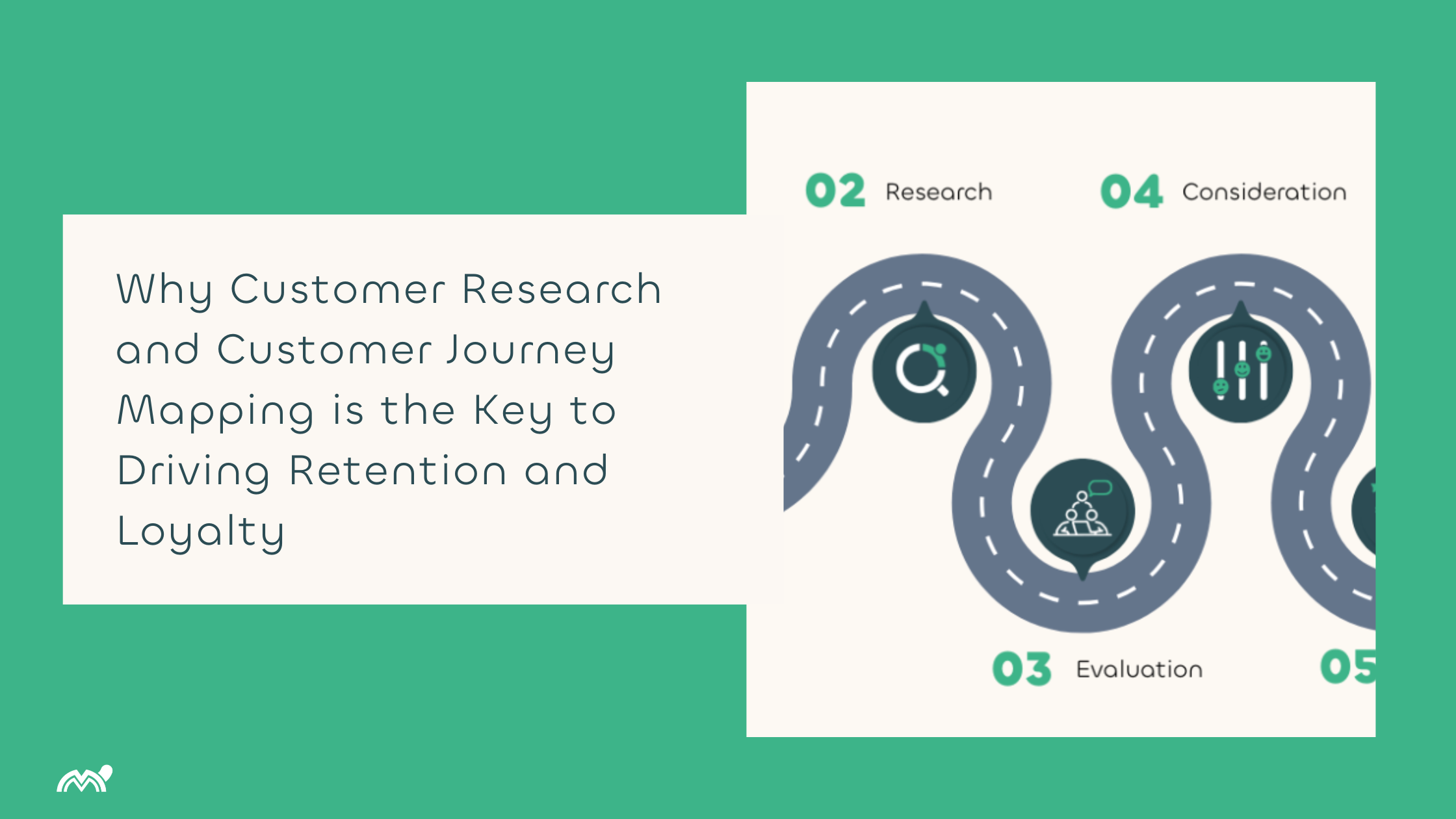
Here are the essential stages of a typical customer journey:
- Awareness: How do customers first learn about your brand or product? What channels are they using?
- Research: How do they gather information about your offerings? What factors are most important in their decision-making process?
- Evaluation: How do they compare your product with alternatives?
- Consideration: What are their main objections or questions at this stage?
- Decision: What makes them choose your product over others?
- Validation: After purchase, how do customers feel? Are they satisfied, or do they have doubts?
- Loyalty: What keeps them coming back? What motivates them to become repeat buyers or brand advocates?

To begin mapping the customer journey, start by interviewing real customers—this is crucial. Consumer interviews are a powerful tool to uncover insights unavailable through data alone. Pay attention to emotions at each stage. How do customers feel? What are their pain points or “aha” moments?
Interviewing the consumer allows you to probe and ask more in-depth questions, leading to a more detailed understanding of their journey.
When you have completed consumer interviews, you can use the insights from your customer interviews to drive other areas of research, such as website behaviour data, CRM data, audience intelligence tools, and more, which will allow you to expand your customer knowledge.
This research will provide a clear path forward in improving your customer experience.
Plus, brands that prioritize customer experience generate 5.7 times more revenue than competitors who lag behind (EduMe).
You can get started: Customer research does not need to overwhelm your team
One of the most common reasons brands hesitate to invest in consumer research, specifically customer interviews, is the perceived lack of time or resources. Many believe it’s too costly or will take too long to see results. However, these concerns often result in higher costs down the line.
To overcome these barriers, do the following:
- Begin with customer interviews and leverage AI tools to gather insights more efficiently.
- Focus on identifying key pain points, emotional triggers, and moments that matter most in the customer journey.
- Think long-term—investing now can save you from costly churn later.
Takeaways for you to think about as you prioritize customer retention and loyalty
- Talk to actual customers: Before launching your next marketing campaign, take the time to understand your current customers’ pain points and motivations.
- Start with simple mapping: Identify the key touchpoints and emotional triggers at each stage of the customer journey to create a more engaging experience.
- Prioritize retention and loyalty: Retaining customers is cheaper than acquiring new ones. Focus on improving your retention strategies to increase profitability.
- Invest in qualitative research: Have discussion guides designed, conduct a third-party interview with your customers, and present insights to support every aspect of your marketing decisions.
How we can help
Need help getting started? Reach out to us for a consultation on how we can assist you in creating an effective customer journey map based on real consumer insights.